Kyzylkum · Khorezm
A road that refuses to be interesting
Four hours of desert with nothing to look at, and then a wall the colour of the ground it stands on.
The taxi filled the way they always fill here, by arithmetic rather than schedule. We had been standing at the edge of the lot for perhaps twenty minutes when the fourth passenger arrived, and the driver, who had been asleep across his own front seats, sat up without being told and started the engine.
There is a way of describing this landscape that makes it sound like something, and I want to avoid it. It is not austere or elemental or vast in any way that the words earn. It is a flat pale plain with a road laid across it, and scrub at intervals of roughly a hundred metres, and for four hours that is the entirety of what there is.
What there is instead is the inside of the car. The driver’s phone playing the same eleven-minute song on a loop, at a volume that made conversation optional. The woman beside me, who taught chemistry in Urgench, working steadily through a bag of apricots and offering me one about every fifteen minutes with the same small gesture, as though it were the first time.
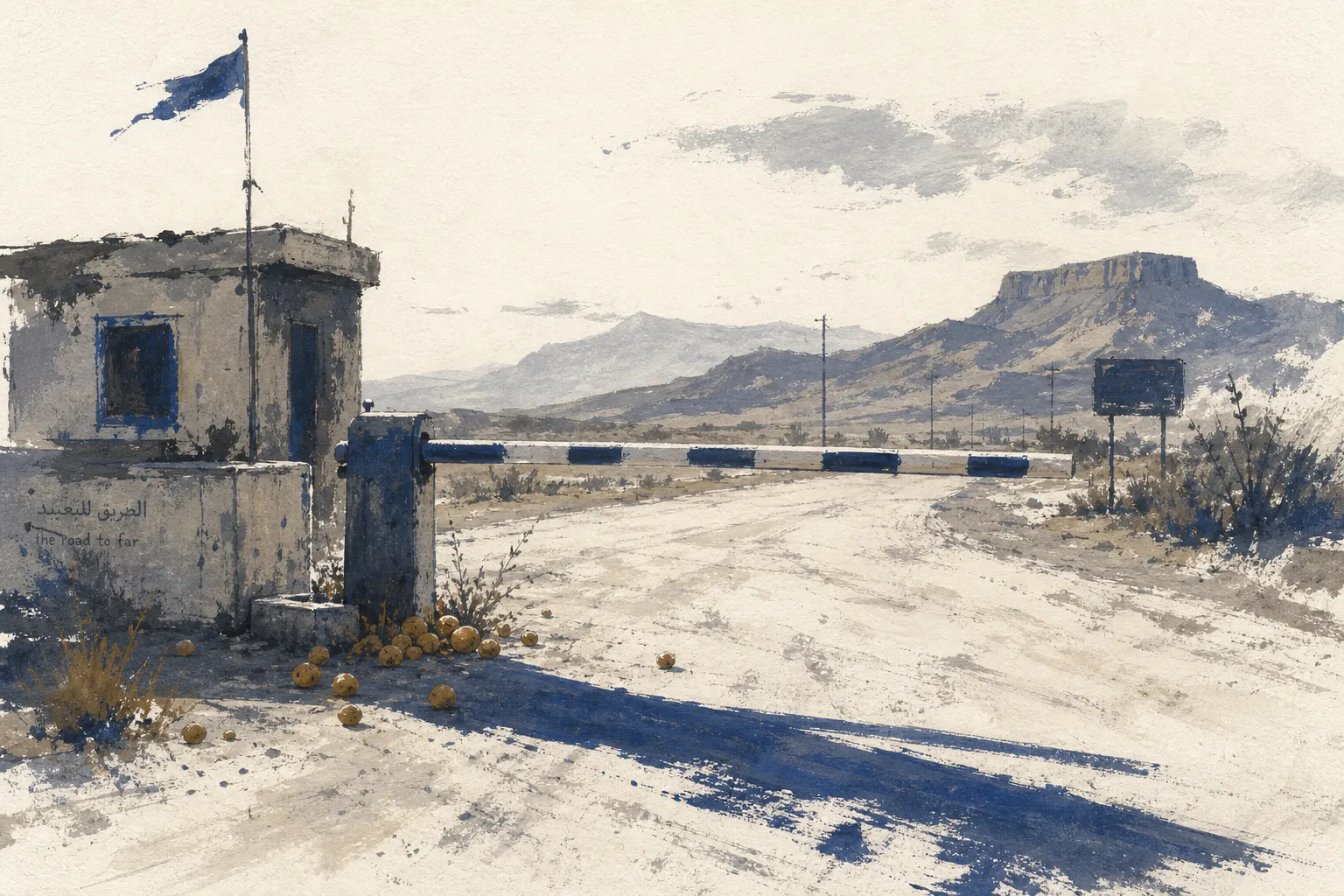
Around two o’clock a checkpoint, and the only moment of the drive with any shape to it: a soldier of about nineteen who took our passports back to a hut, stayed inside for eleven minutes, and returned them without having opened either one.
Gulnara said something to him in Karakalpak, and he laughed, and she translated it for us afterwards as “he is bored, not important”, which I have thought about several times since as a description of a great deal of official architecture.
He is bored, not important — which is, I think, a fair description of a great deal of official architecture.
Then the road began to be red, in the way that had been promised, and thirty minutes later there were irrigation channels and cotton and the first trees we had seen since morning, and the desert simply stopped, without any transition worth recording.
Khiva does not announce itself. You come in through a normal Uzbek town of low concrete and satellite dishes, and then there is a wall, and it is the same colour as everything around it because it is made of the same mud, and the difference between the wall and the town is only that the wall is older and better made.
We paid the driver, who had not spoken to us in four hours and now shook both our hands at some length, and walked in through the gate at the hour when the light stops being a problem and starts being the point. Inside, the colour: every dome and every façade in cobalt and turquoise, laid over the same brown mud as the wall, as if the town had decided that if it could only afford one good idea it would do that idea completely.
It works. It has worked for six hundred years. We sat on a step until it was dark and did not take many photographs.
Colophon
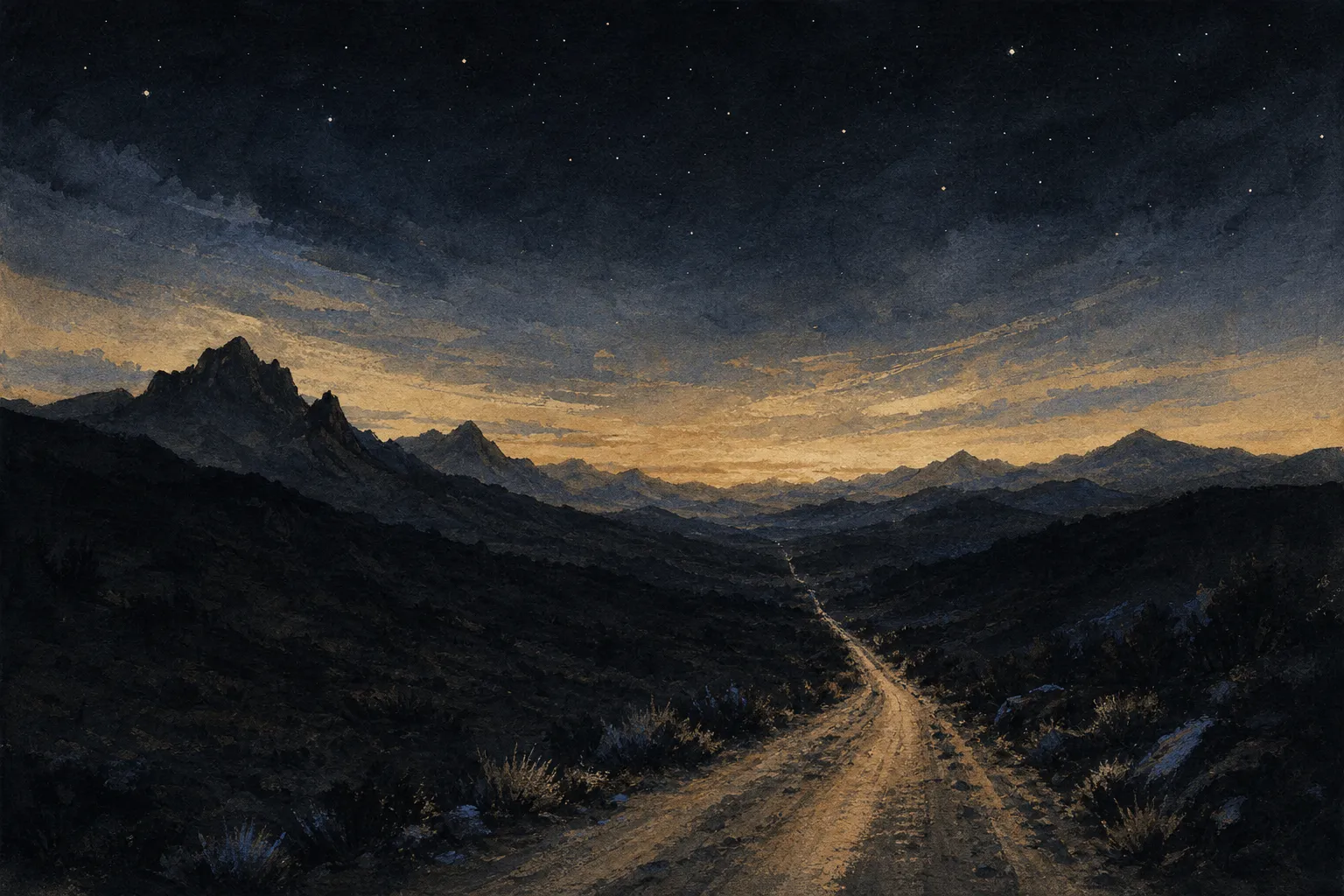
This page is the first public specimen for Parasang Chronicles — the shape of the travel log before the road supplies the actual days. The entry is invented; the plates are generated tonal studies standing in for photographs, so the layout can be judged on weight and rhythm rather than on any particular picture.
- Palette
- Cobalt-lapis and turquoise glaze over unglazed brick — the Timurid tilework of Khiva, Bukhara and Samarkand — set on ash rather than the usual cream. One accent, used sparingly: lapis for structure, turquoise reserved for the route and for people.
- Type
- Hoefler Text for display and Iowan Old Style for reading, both resident on macOS and iOS, so this renders as intended on your own devices. Logbook data is set in SF Mono — a chronicle records position and distance, and that is data, not prose. Production would self-host Newsreader and Source Serif 4 as open-licensed equivalents.
- Layout
- An asymmetric measure with a wide left margin, after a manuscript page. The margin carries glosses, notes on people met, and their consent status. Photographs break the measure at three widths; the section rule and route line are the only ornament.
- Not used
- Parchment texture, sepia, scroll motifs, compass roses, aged paper. The historical reference is in the palette and the page structure, which is where it can carry weight without becoming costume.
On a Russian or Vietnamese edition, this line would read: Translated by machine from the German original. Passages the translator flagged as uncertain have been removed rather than published unverified.